Pure hearts and bloody hands in a genocide
I used to mostly think of the powerful bureaucrats at the head of major institutions – public broadcasters, universities, arts bodies, government agencies and departments – as managerial drones. The qualities they show in their professional lives – their grey careerism, their frequent ruthlessness, their conformism, their hypocrisy – seemed to follow naturally from their steadfast loyalty to the status quo.
After Gaza, I don’t know how accurate that is anymore. Now, I’m more inclined to emphasise leaders’ agency, their active commitment to genocide. They’re not just forced by systemic pressures to support Israel’s apocalypse in Gaza. They don’t just crush Palestine solidarity in the workplace because they think they have no option – often, they actively choose, and sometimes positively want, to do so.
We’re rightly conscious of the need to humanize Palestinians. Gazans are more than the devastating statistics of the murdered, maimed and starved: they’re real lives in real resistance. But we should also humanize the enablers of the staggering crimes against them. That doesn’t just mean the warmongers-in-chief – the politicians and arms manufacturers – but also their hangers-on: the propagandists, the influencers, the collaborators.

We should pay special attention to the war criminals’ most subtle allies: the proud captains of institutions, the great and the good of civil society. Leaders of prominent organisations, senior journalists, university heads, powerful bureaucrats, these collaborators strengthen the cause of genocide while all the time insisting that of course they are against what Israel is doing. They all could have spoken up. All of them could have used the authority of their positions, their significant social capital, to oppose the vicious slaughter of tens upon tens of thousands of people.
Instead, they chose to side with the genocidaires. Perhaps, at first, some of them hesitated; but they soon learned to do everything in their power to discredit, intimidate and repress Palestinians and their allies. Indirectly but no less really, they are enabling Netanyahu and the other killers.
Who are these enablers? What would it be like to be one of them?
*
I happen to work in a university, but I don’t think universities are essentially different from anywhere else. University leaders are simply those to whom academic success gave a first taste of power. In different circumstances they could easily have ended up running a government agency, an arts organisation, a broadcaster. Like enablers elsewhere, what seems to ultimately interest the enablers in universities isn’t their organisations’ actual purpose, but, apparently, control. Higher education just supplies the setting where they can exert it. And if it’s not control they’re hungry for, then they are driven by some similar appetite: success, domination, prestige, validation – exactly which one doesn’t matter.

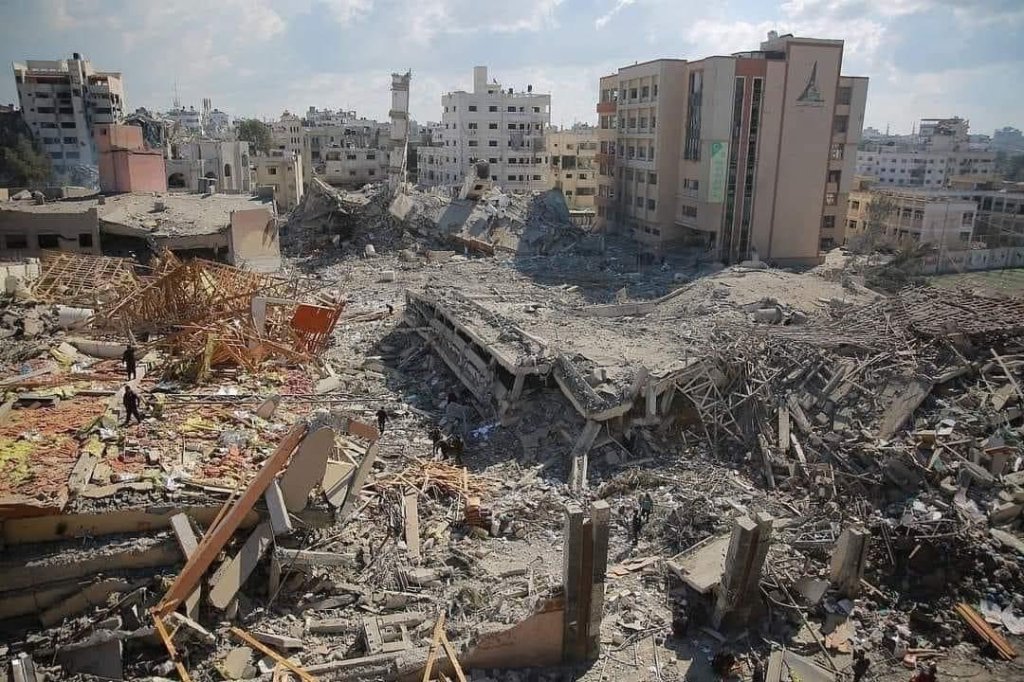
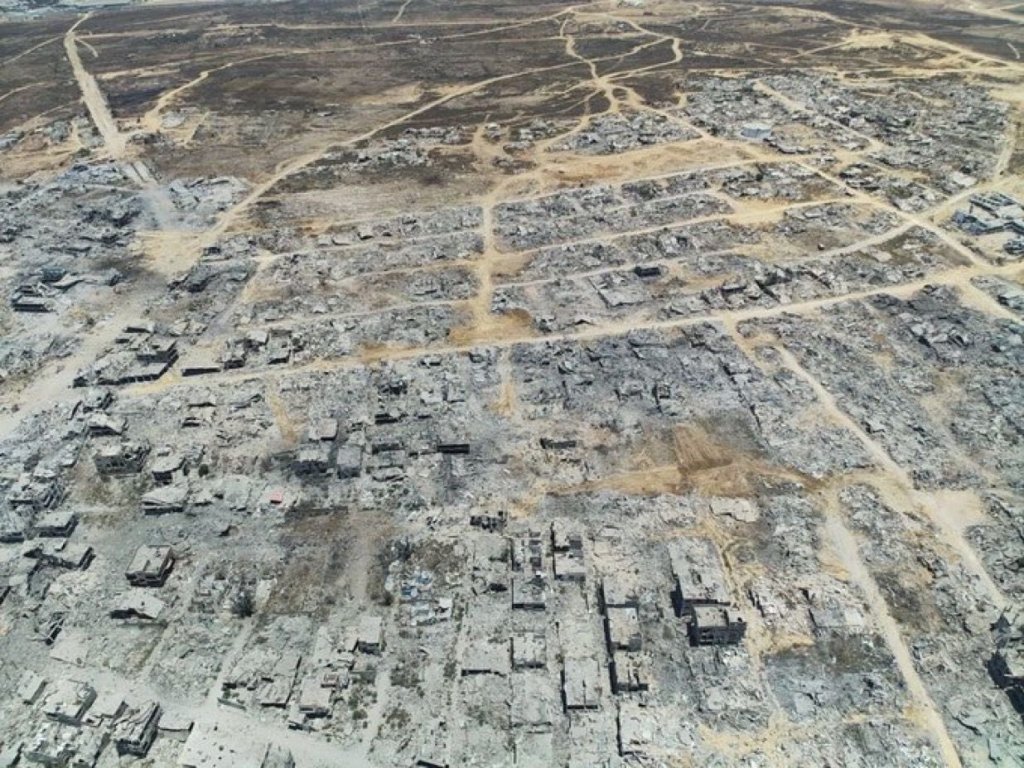
All university campuses in Gaza and most schools have been destroyed, the enablers are told. Almost all the hospitals. The water system. Mosques. Monuments. Clinics. Fields. Orchards. Gardens. Libraries. Bakeries. Bookshops. Archaeological sites. Sixty thousand people, at the very least. At least seventeen thousand children. Over two million people are being deliberately starved and risk being murdered while waiting for food, while Israel plans concentration camps and permanent mass displacement. The enablers know this, but you can almost see them shrugging their shoulders. They mouth some platitudes, but what they really mean is ‘so what?’. Education, culture, medicine, social services, agriculture, the bare necessities of life, Gazans’ lives themselves – fundamentally, for the enablers, these have only one point: to be swept up into the logic of their professional success.
Success is something they are good at: in fact, they are the definition of success in our society. Some of them, after all, are clever. One of their greatest talents is speaking but saying nothing. Saying nothing is the better option when your only true principle is expediency, when you have nothing to say other than whatever the people more powerful than you, the people you rely on for your position, are saying. The enablers’ silence is conformism in genocide, but they dress it up as moderation, sobriety, reason.
They live in the ‘real world’, they often tell us. But they don’t just live in it. They worship it, in all its sordid violence. They worship it because it is their world, the one they and others like them have made. It is the theatre of their flourishing, dominated by their monolithic self-interest.
The enablers understand that they cannot be distracted by contingencies like mass murder. Nothing can escape their anaesthetizing bureaucratic rationality. We shouldn’t get things out of proportion, they think. There have been worse genocides. This is only a little one. It’s probably not even a genocide at all. In their vacuous emails to their employees, the ‘conflict in the Middle East’ is referred to, fleetingly, in the same tone as an announcement of a new IT system.
Why would anyone care about the views of those who, in a genocide, have chosen silence? But the enablers cannot allow dissent: since they are silent, they need us to be as well. They cannot be confronted with their own responsibility. Their mute obedience cannot be challenged. No one can show them up as what they are – allies of mass murder. They have to beat us in morality like they beat us in everything else. They must be the winners. So they go after us. There is no red line they will not cross, no bar too low for them to stoop under in order to silence us whenever they have the opportunity.
*
Of course, the enablers are not alone. They are coddled by bevvies of flunkies and admirers, the ambitious underlings who aspire to one day have the same power and influence as them. They are further bolstered by the stupid, the complacent, the irresponsible. By the ‘confused’, the ‘too busy’, the lookers-away. By the fanatics shrieking ‘when will you condemn Hamas?’. By those who complain it’s all too ‘distressing’ or ‘complicated’. By those who are ‘just doing their job’.
By the bankrupt, in short. We should probably pity them.
Like everyone, the enablers experience tender feelings. Citizens of the world, they are ‘appalled’ and ‘distressed’ by ‘events’ in the Middle East. How could they not be? They are human – but, apparently, not in the same way that Palestinians are. The enablers are better humans. If they were targets of genocide, they would certainly deserve Gazans’ support. Because their hearts are pure, their consciences clean.
The enablers’ hearts are indeed pure: pure stone. They are also cowardly. ‘The ‘political climate’ – the one they have created and from which they profit – means their hands are tied. They cannot afford to oppose genocide: doing so could undermine the important work – the important work – for which they are responsible. ‘Look at all the good things our organisations do!’, they protest. If, on our side, we were in any way serious, we would understand that now is not the time to fight. Others in their position may have taken a stand, but they cannot. For them, it’s different. Trust us, they insist. We know best.
For all their power, the enablers are fragile. They read these words and others like them and are horrified. How can you show us such contempt, they ask – injured, incredulous, as though we are meant to believe that we are something to them, that what we think counts, as though their employees are anything more to them than cells on a spreadsheet. Will nothing dislodge them from the moral high ground they are convinced they occupy? Sixty thousand murdered Palestinians certainly haven’t. Would six million?
They know the high ground is theirs, they know they are beyond criticism, because, otherwise, how did they get their current authority? If they are not morally better than us, if they are not almost infallible, then how can their power and all its rewards be explained? The holiday homes, the luxury travel, the obscene salaries, the unbelievable bonuses? It does not even occur to them that it is because they are enabling a genocide that we treat them as we do.
*
We cannot count on a future reckoning that will justify us and condemn them. When Palestine is finally free, the enablers and their sycophants will try to rewrite the narrative of its liberation. In real life, they were support acts for Netanyahu, but in their narrative, it will be they, not us, who embodied the ‘real’ opposition to the genocide, who selflessly took on the ‘serious’ struggle for Palestinian freedom. Their triumphalism will give no quarter. In the enablers’ history, if Palestinians and their allies even have a role, it will be as they see us: philistines, political infants, fools, exaggerators. Posturers, wreckers, antisemites. That, at least, is their plan – to the extent that they have any plan beyond the urgent servicing of their most immediate interests.
We don’t care. We are in this for justice for Palestine, not the benediction of our opponents or the approval of future historians. But if winners write history, we understand that, at this moment, the winners have not yet been named. So far only the losers are known: they are lying in anonymous mass graves under the rubble of Gaza.
There’s something else we understand, too: when it mattered, we opposed genocide. Along with all those who follow them, the enablers were asked to, repeatedly, and refused. Instead, they willingly enabled it.
As an expression of their racism, as a tool of their careers, as a certificate of their brutality, as proof of their cavernous political and moral emptiness – the enablers actively embraced and promoted genocide. They enabled the sickening holocaust of Palestinian life in Gaza.


 Actual Tasks
Leave a reply to Don anderson Cancel reply